We solve what's costing a business its sales, its margin, or its customers — through process improvement, the right technology, and AI where it actually helps. Whatever actually fixes it. Decided with someone who has run these at scale, not someone selling a tool.
FinAI Innovations solves the business problems that hold a company back — in sales, marketing, production, and customer delivery — through Intelligence: the right mix of process improvement, technology, and AI. Led by an executive who has built and run these at global scale.
Intelligence is the right mix of process improvement, technology, and AI, applied to one specific business problem.
Sometimes the answer is redesigning how the work flows. Sometimes it's a system. And sometimes it's a model that forecasts demand, flags an anomaly, or reads thousands of customer comments at once — AI applied to a named job, not "AI" in the abstract.
The problem decides — not the tool. And if a problem doesn't need AI, we say so.
Most of these will feel familiar. We start where it hurts.
Every company makes a promise: to its customers, its board, its market. The problem is rarely that leadership stops caring. It's that no one can see where the promise breaks — shift to shift, branch to branch, customer to customer. The signal arrives too late to act, or never surfaces at all.
Can you truly say that every point where a customer meets your company is keeping your brand promise?
And if not — do you know which endpoints are failing, and why?
You can't fix what you can't see. So we start by making it visible — turning scattered signal (your customers' own words, your operations data, your service touchpoints) into a live view of where the promise holds and where it breaks, mapped to the promise you actually made. Visibility is the precondition for everything that follows — measurement, adoption, and improvement all depend on it.
An executive-led, fixed-scope engagement that brings the CEO, the board, and the leadership team together to decide one thing: which problem to solve first, and in what sequence. We facilitate the choice against four board-level tests:
Your leadership team leaves the room with the right problem, an agreed sequence, and the organization aligned behind it — not a capability pitch.
Plans go stale before they ship. Big-bang changes can't be measured. The technology comes first and the problem second. Foundations get built and never used. Underneath every version is the same cause — the team was handed the change instead of owning it. Our approach is built to remove that cause.
The right problem is the one we can answer four questions about: will solving it improve a business outcome you can measure and see, will your people adopt it, will the first investment earn the next, and will the organization come out stronger? We facilitate that choice with the CEO, the board, and the leadership team — because the problem, the sequence, and the funding live there, and nowhere else.
FinAI works as your Chief Transformation Officer — reporting to the CEO. We bring the vision, the design, and the management to deliver it. The build runs through your own people and vendors — not an army of ours. Technology deployed is not technology adopted.
This is a principle, not a nicety. The people who have to run the solution own it — they sit in the driving seat for the design, the decisions, and the adoption. We bring the judgement and the pattern; they bring the context and the ownership. A solution the team owns is a solution that sticks. One handed to them is one that quietly dies.
But ownership has a cost. Do your people have the time and bandwidth to take it on? If they don't, we design for that reality — phasing the work, freeing capacity, keeping the footprint light — rather than pretend the time is there. A change no one has room to absorb is a change that fails, however good the design.
We design and deliver one thing end to end, then the next. Every slice — including the foundational, plumbing work — has to meet a business outcome and be absorbed quickly, or it's wasted effort. So we never build a platform and hope. Each step lands, gets adopted, and earns the next. The first working result funds the rest of the roadmap — speed to a working result is the priority.
Every solution has to clear the same bar. It must:
In each, we found where the business was stuck and designed the way through. The technology is the enabler; the result is business.
A company was carrying a large financing cost on its own balance sheet — effectively funding work it had already delivered, and earning nothing for it. We found the way through and designed it: turning that standing cost into a new, recurring revenue stream, built on data the company already owns.
A manufacturer wanted to scale into new markets, but output swung shift to shift and process waste ran high. We began with discovery, then designed intelligent scheduling — capacity and priority set by the system, with a human override that has to be explained — to take the waste out and steady output.
An industrial company ran month-end close as an end-of-month scramble. We worked out the fix — not a new core system, but a layer that processes continuously through the month and reads the data daily, shrinking the close from a weeks-long crunch to hours. Let the core system do its job, and run the intelligence in a layer on top.
A premium services business could only scale by adding people — and watched its margin bend as it grew. We designed the operating system to carry it — encoding what makes the delivery premium into platform and process, so the routine load is absorbed and the team moves to the front-end, client-facing work that actually grows revenue.
A large consumer business couldn't see what its customers were really saying — feedback scattered across public and internal channels, the pattern invisible. We read its customer feedback at scale, ranked it against competitors, and pulled the actual words to show exactly where the brand promise was breaking — so repairs target the pattern, not the symptom.
In premium service settings, the intent is right and the people are capable, yet quality swings floor to floor and shift to shift, and the signal only surfaces after the fact, too late to act. We designed the answer: make load and responsiveness visible in real time, turning everyday touchpoints into live signal mapped to the organization's own promise, so teams move to where the strain is before the customer feels it.
Six problems unblocked — new revenue, production, finance, growth, customer, service. One approach: find where the business result is stuck, and use the right mix of process improvement, technology and AI to free it.
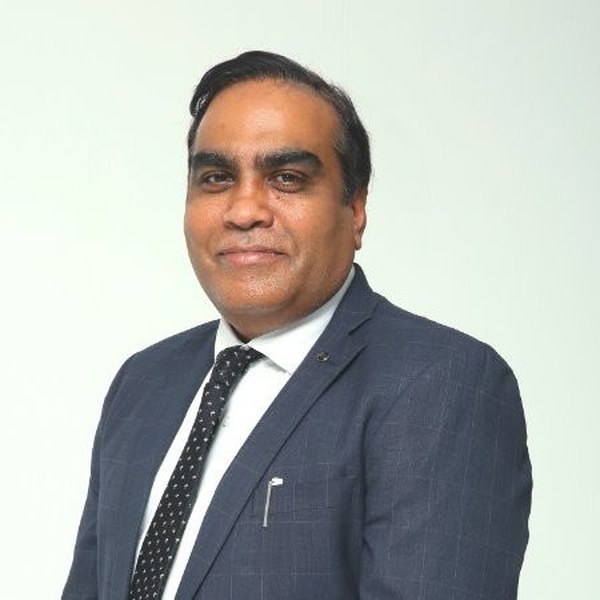
Rajesh Kuppuswamy founded FinAI Innovations after three decades building and running business, technology, and operations at global scale — as a CEO and CTO, and across product management, sales, and marketing. Across banking, payments, retail, telecom, and industrial IoT, he saw the same pattern everywhere: technology gets deployed, not adopted, because the change is handed to teams instead of owned by them. FinAI exists to fix that — start with the right problem, deliver it through your own people.
Holder of 10+ global patents.
Answer a few questions and we'll set up a conversation. No pitch — we start by understanding what's costing your business.